Book
Permutation City, Read Between Closes
★★★☆☆
March 2, 2026 · by Grant Ellison
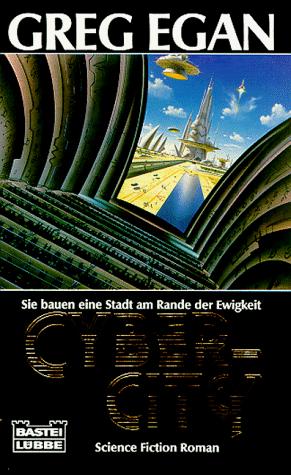
Picked this up because a regular at the bar kept telling me it changed how he thought about consciousness, which is a lot to promise from a paperback with a jewel colored cover. Greg Egan, published in 1994, won the Campbell for it, and computing power gets treated in these pages like something you have to ration carefully, which now feels almost quaint.
The setup: people scan their brains and run copies of themselves in virtual worlds, mind uploading perfected but limited to whoever can afford it. Paul Durham wants to build something that never collapses, never, expanding forever on no hardware you can point to, and he never really tells you how he gets there. I kept waiting for the page where it clicks, where the mechanism gets laid out the way you’d lay out a recipe, and it doesn’t come. Question: can someone explain how Durham managed to create a virtual environment that runs indefinitely, abstracted from any underlying hardware?? Never explained, not once.
This is very much a book of two halves, and the first one is the better one. Maria’s mother has cancer, refuses to be Copied, and Maria needs the money to change her mind before it’s too late, that’s what pulls her into Durham’s scheme in the first place. His calm monomania against her skeptical, complicated reactions to it, that’s the best writing in the book. Then the novel changes gear toward the end, becomes more of an action movie with no scientific explanation for what’s going on, and a handful of other readers noticed the same seam, the back third reads like a different book wearing the front third’s jacket.
The Dust Theory, the idea that a pattern can assemble itself out of scrambled fragments the same way a universe might assemble itself out of a cloud of random numbers, that’s the part everyone wants to talk about, and it’s the part I trust least. Once you’ve played the “in an infinite universe, anything can and will happen” card, I stop feeling obliged to care about the plot, because at that point you’re just randomly reporting events.
Still glad I read it. Made me think about backups longer than I planned to, standing at the counter at 1am with the prep still not done.
Call it a strong three, five for ideas, three for story, split the difference on a night I’m feeling generous.